Champagne & Barware · Collector’s Guide
Vintage French Champagne Buckets: A Collector’s Guide
Few objects capture French table culture as directly as the champagne bucket. Practical by design and often decorative by intention, these coolers accompanied celebrations in restaurants, bars and private homes across the twentieth century. This guide looks at how they were made, how French Champagne houses and tableware makers shaped their appearance, and how a collector can approach identification, dating and condition with care.
From Champagne Service to Collectible Design
A champagne bucket has one job: to keep a bottle cold at the table. Yet the way that job was met in France reflects far more than function. The form sits at the meeting point of hospitality, industrial design and branding — a small object asked to look correct on a well-set table while surviving daily use in a busy dining room.
That double life is why vintage examples are collected today. Some were made as refined tableware; others were produced for or on behalf of Champagne houses and carry their names and emblems. Between those poles lies a wide range of materials, shapes and finishes, which is exactly what makes the category rewarding to study rather than simply to buy.
Champagne Houses and Their Branded Buckets
The best-known vintage buckets are those associated with French Champagne houses. Branded coolers were used in hospitality settings and have become recognisable objects in their own right, carrying house names, emblems and colours. It is worth being precise about what such branding tells us: a house name identifies the brand the object was made for or used by, not necessarily the workshop that produced it.
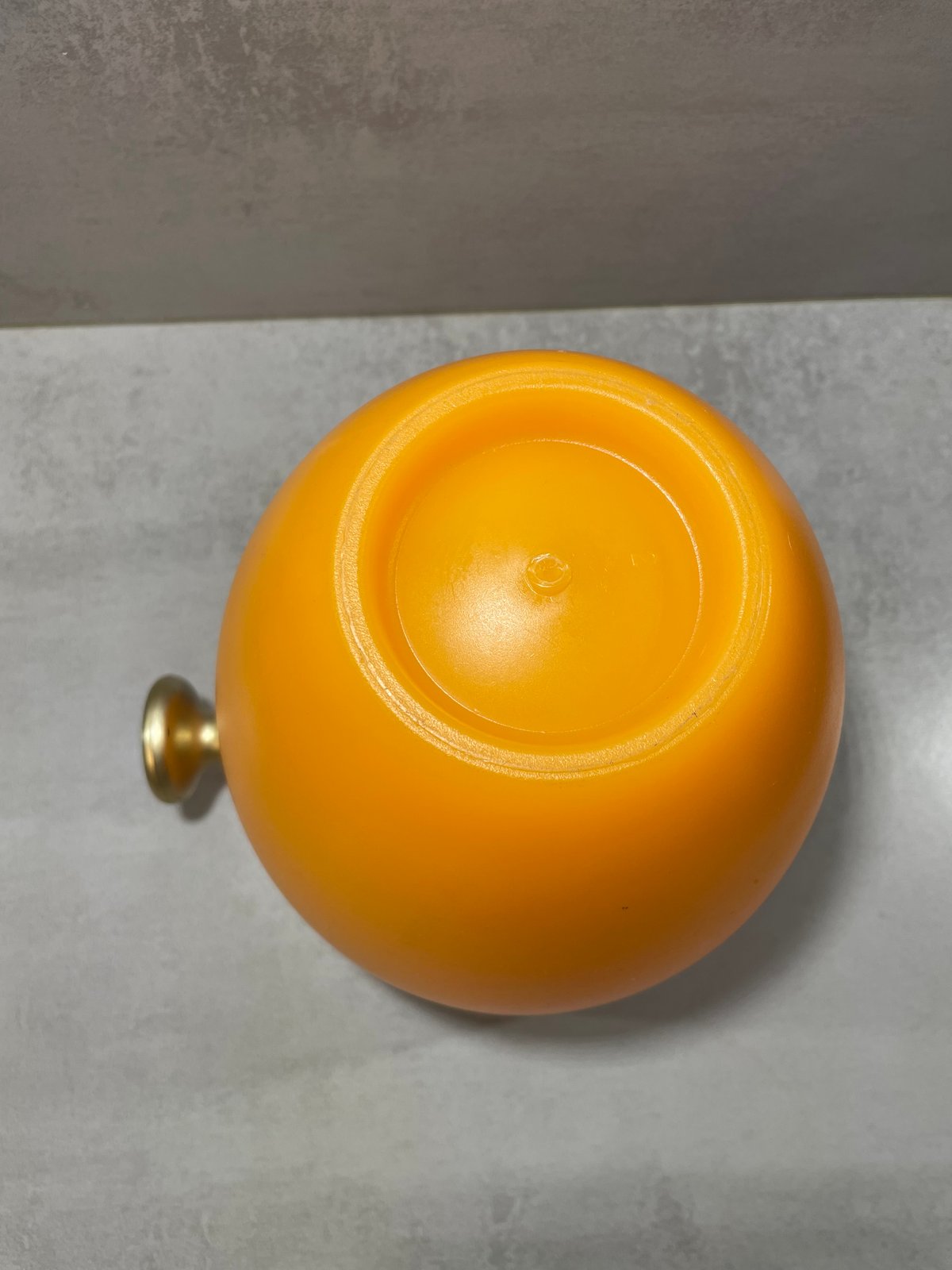
The Veuve Clicquot Ponsardin example in the Cook & Collect collection illustrates how colour and material can serve a brand. Its translucent orange body creates an immediate visual connection with the distinctive yellow-orange palette associated with Veuve Clicquot, set off by large black lettering and the repeated anchor emblem. It is a strongly sculptural object, and a useful reminder that branded barware was not limited to metal.
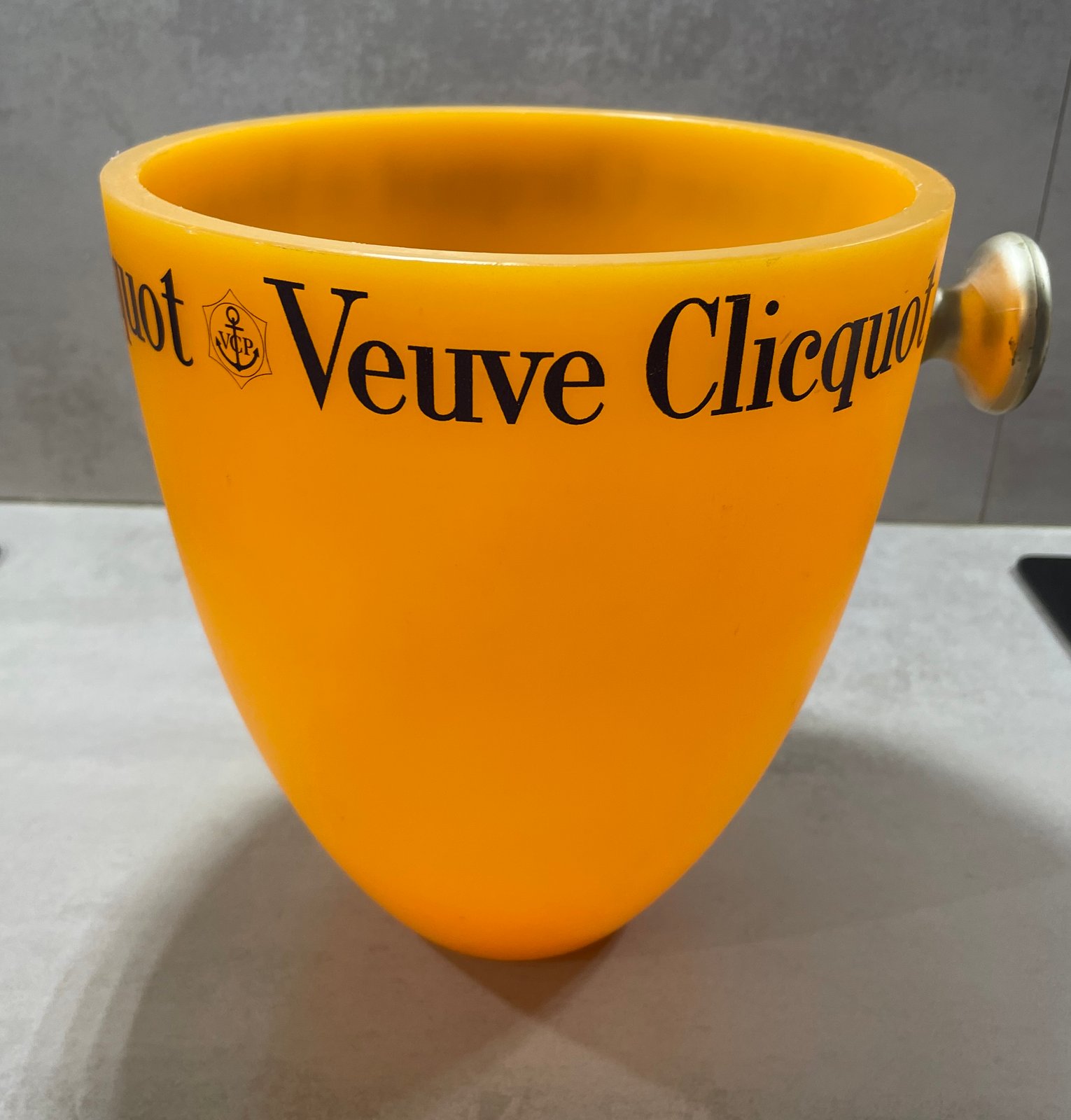
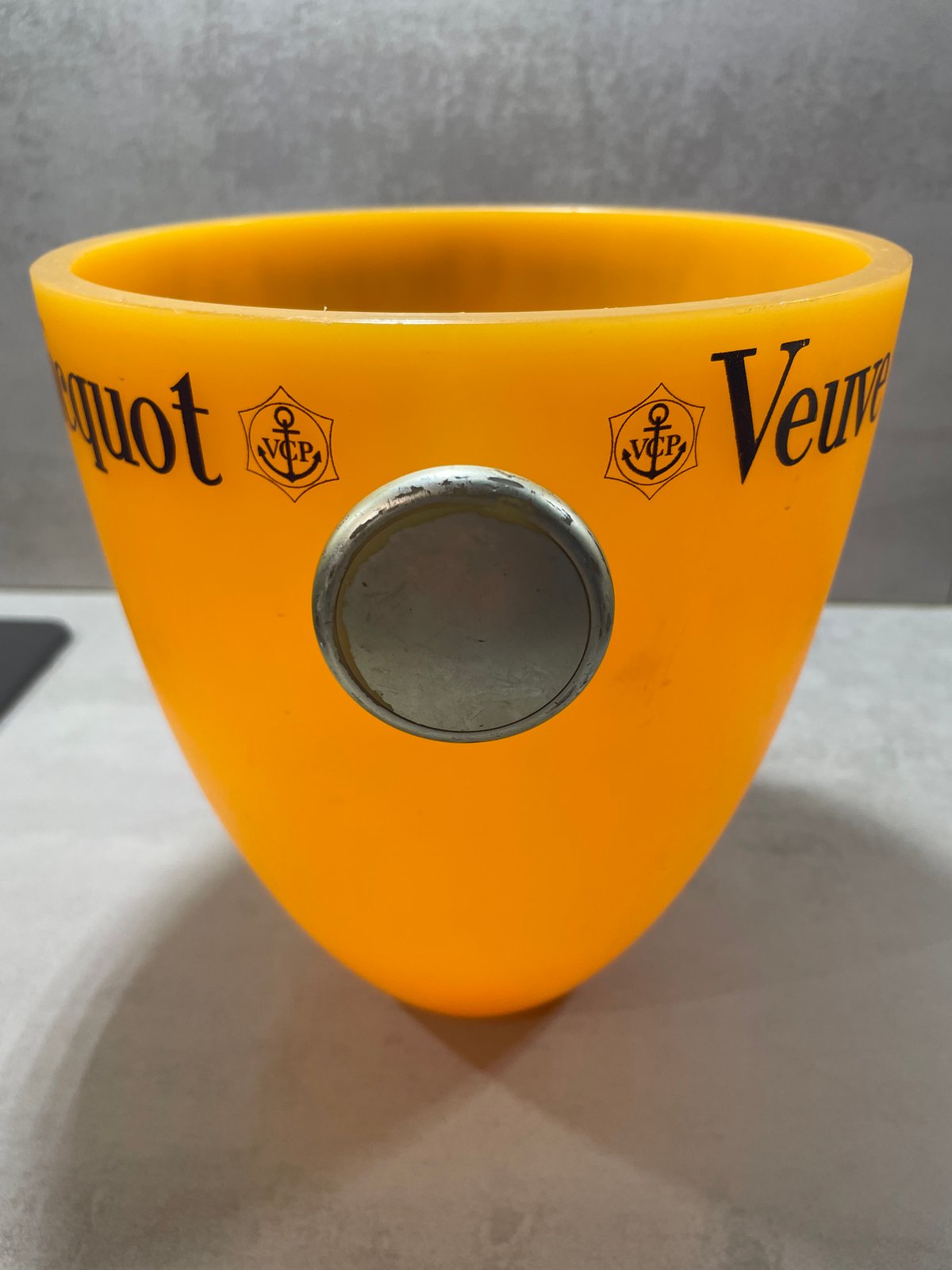
Reading the mark: V.C.P. and the anchor
The initials V.C.P. stand for Veuve Clicquot Ponsardin. Together with the anchor emblem, they belong to the historic visual identity of the Champagne house and can be traced back to the era of Madame Clicquot. For collectors, however, an important distinction must be made. On a Champagne serving object, the Veuve Clicquot name and V.C.P. anchor identify the Maison for which the object was produced, but they do not necessarily identify the manufacturer of the bucket itself. Establishing the maker requires a separate manufacturer’s mark, catalogue reference or other documentary evidence.
The body is a translucent moulded synthetic material, often described as acrylic in comparable examples; no material mark confirming the exact polymer has been identified on this piece.
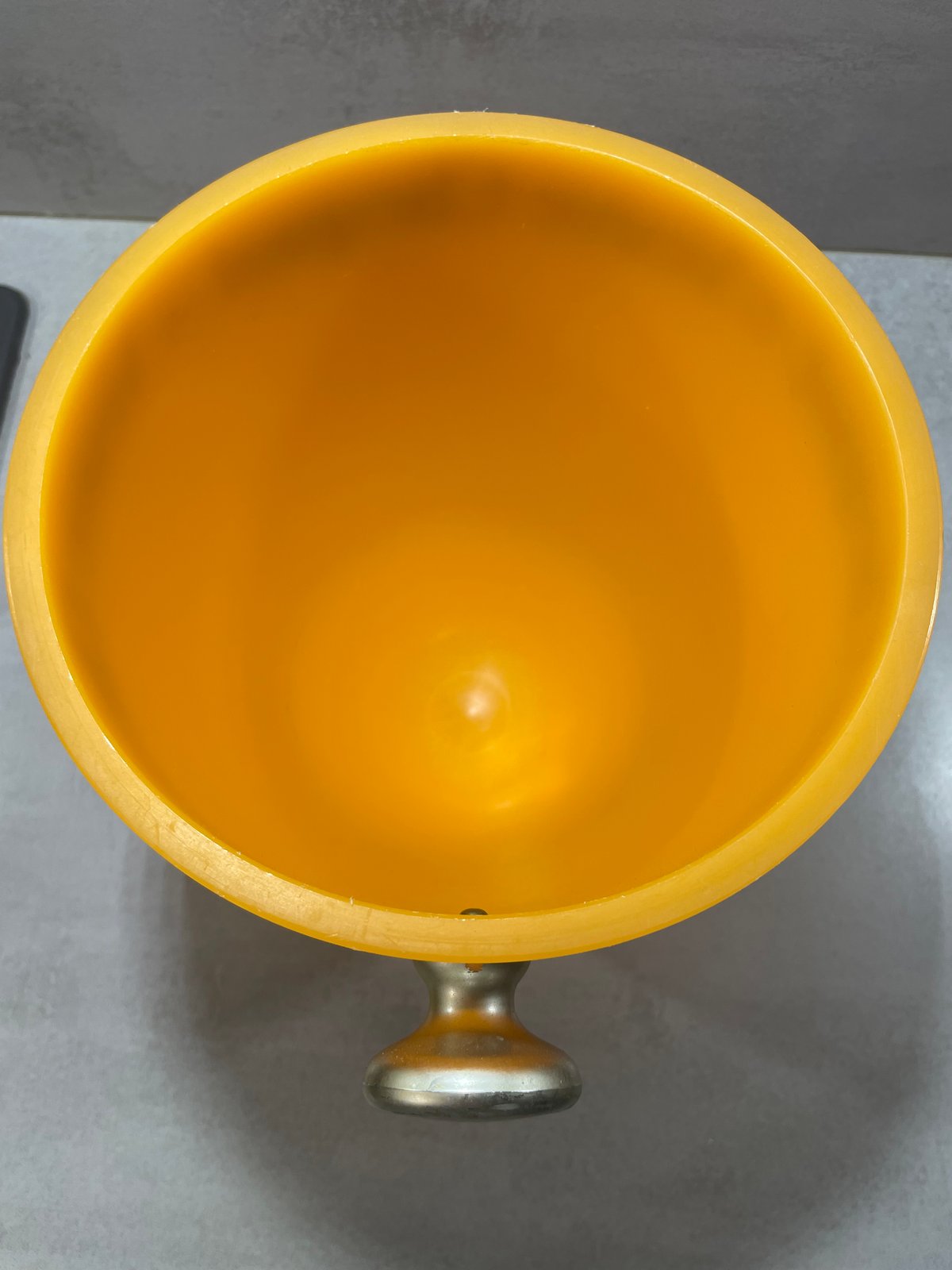
Dating this Veuve Clicquot champagne bucket
Dating vintage Champagne barware requires caution. Comparable orange Veuve Clicquot buckets have been attributed to different periods within the second half of the 20th century, but such market attributions are rarely accompanied by period catalogues or manufacturer documentation. The historic V.C.P. anchor cannot date the bucket by itself. The emblem predates the object by many decades and identifies the Champagne house rather than the manufacturer or production date of the serving object. No manufacturer’s mark or period documentary reference identifying this exact model has yet been established. Cook & Collect therefore describes this example conservatively as 20th-century French Veuve Clicquot barware rather than assigning an unsupported precise production date.
The Moët & Chandon aluminium bucket in the collection makes a related point about markings, and is discussed in detail below.
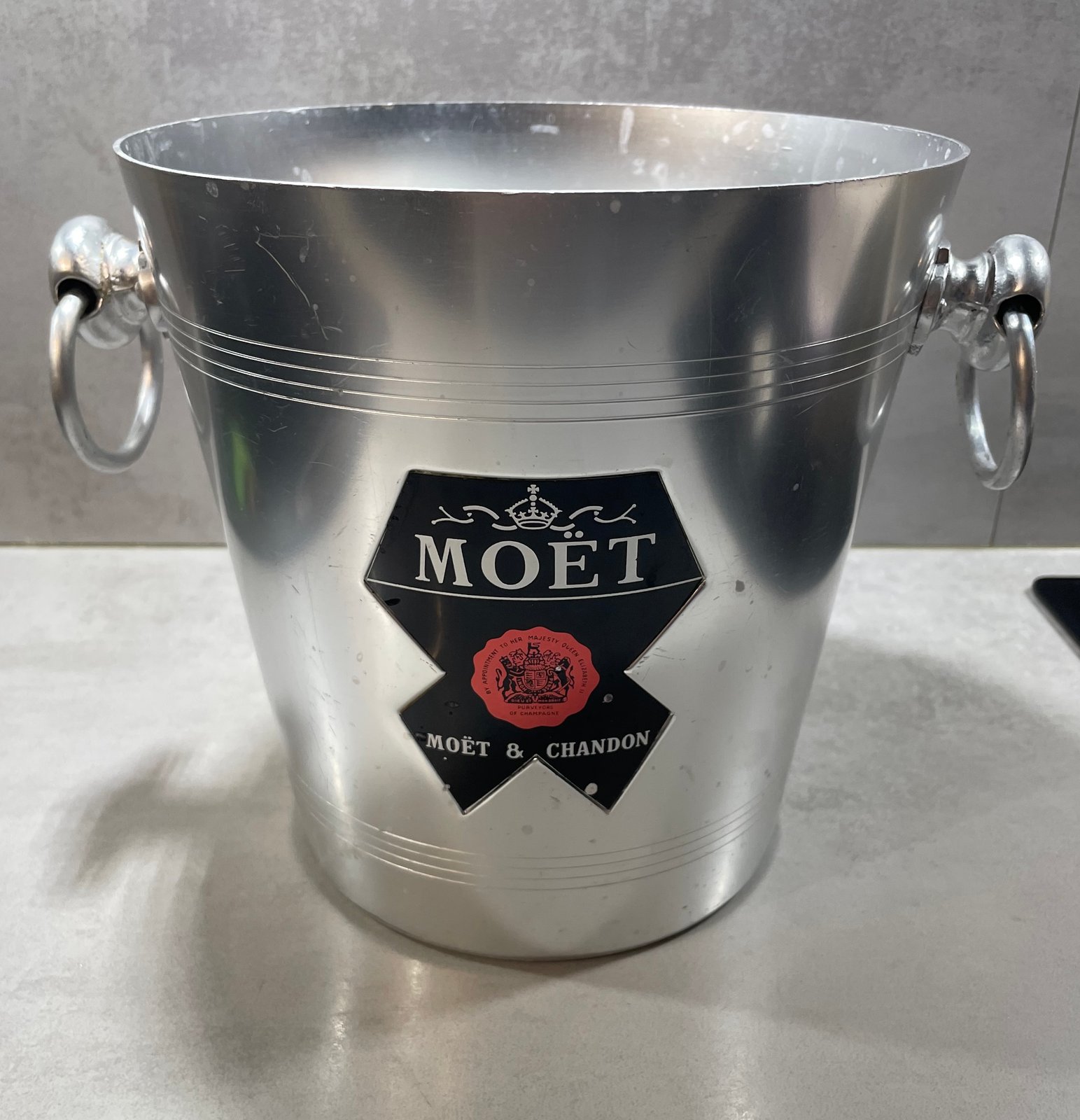
Reading the Moët & Chandon bucket
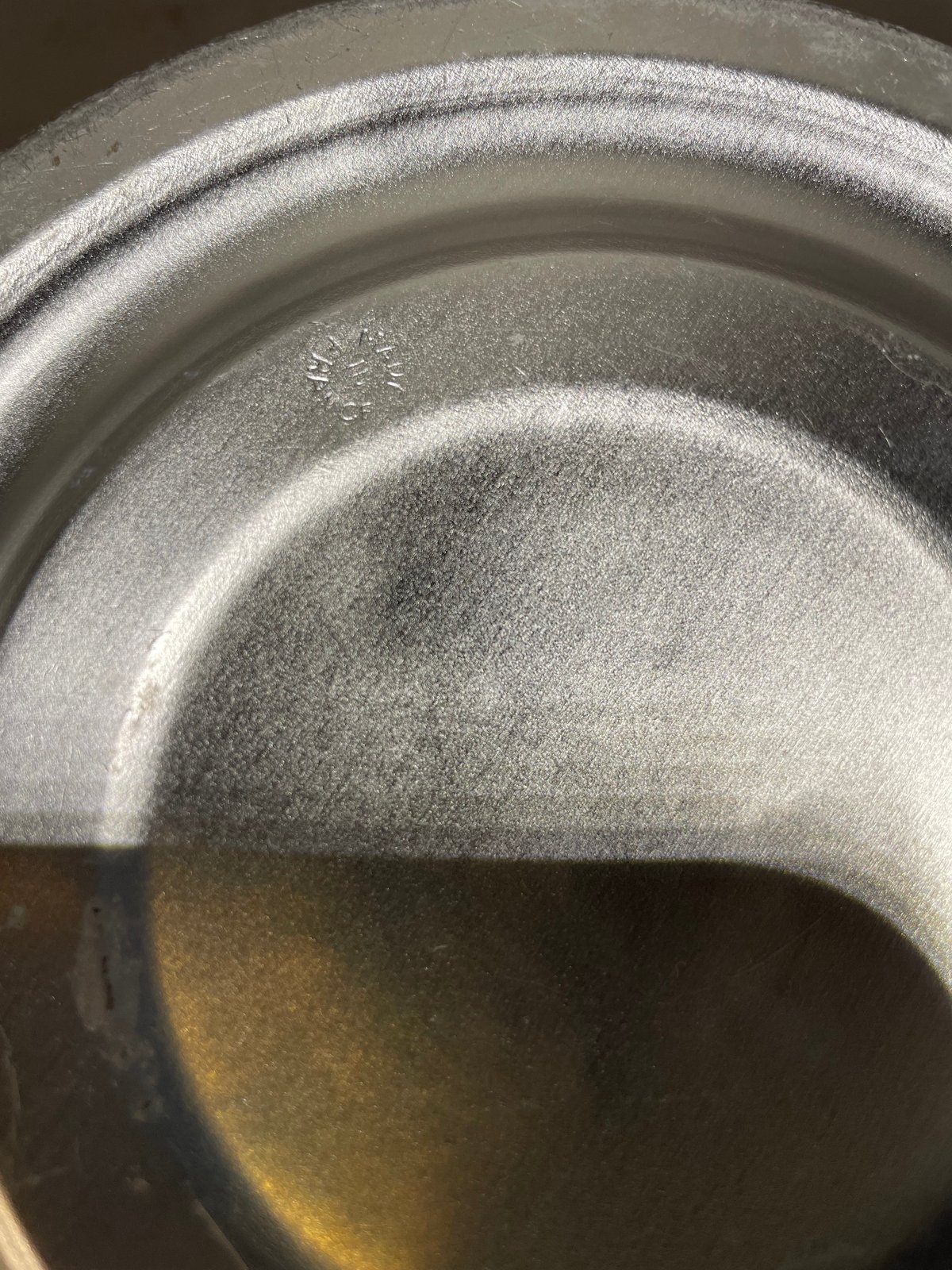
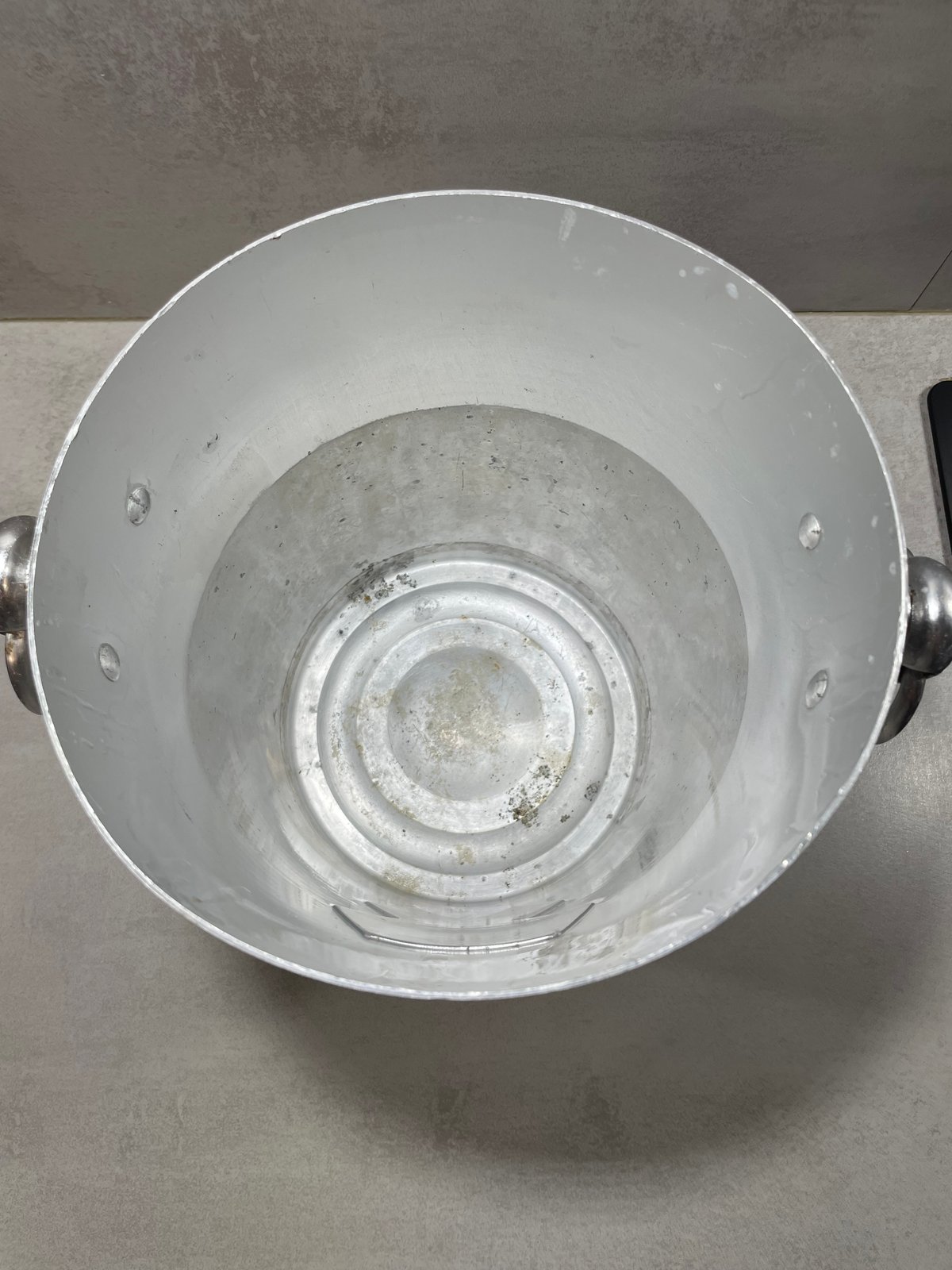
This aluminium Moët & Chandon bucket belongs to a recognisable family of French Champagne-service objects produced during the second half of the 20th century. Its characteristic details include a tapered body, horizontal decorative bands, articulated ring handles and a contrasting black Moët & Chandon plaque with a red central seal. Comparable surviving examples show closely related proportions, construction and decorative treatment. These comparisons are useful for placing the object within the broader tradition of later-20th-century French Champagne barware, but they do not establish the manufacturer or an exact production year.
What “Made in France” tells us
The base of the Cook & Collect example carries a simple “MADE IN FRANCE” mark. This provides useful evidence of French manufacture, but it should not be interpreted as a manufacturer’s signature. This distinction is particularly important with branded Champagne barware. The Champagne-house identity belongs to Moët & Chandon, while the physical object may have been manufactured by a separate specialist producer. Similar Champagne buckets can survive with specific manufacturer marks, but visual similarity alone is not sufficient evidence to transfer one of those attributions to an example carrying only a country-of-origin mark. Cook & Collect therefore records the manufacturer of this example as currently unidentified.
Collector’s note
“Made in France” establishes country of manufacture, not maker. A specific manufacturer should only be assigned when supported by a physical maker’s mark, period catalogue, advertisement, manufacturer documentation or another reliable documentary source.
Dating the Moët & Chandon bucket
The aluminium construction, ring-handle format, graphic Champagne-house plaque and overall design place this bucket within the vocabulary of French Champagne barware of the second half of the 20th century. Comparable surviving examples are frequently associated with the 1970s and 1980s. This provides useful comparative evidence for the probable period of the Cook & Collect example, but in the absence of a period catalogue or manufacturer documentation for this exact model, it should not be treated as a precise date. On the evidence currently available, Cook & Collect describes the object as: France, second half of the 20th century, probably 1970s–1980s; manufacturer unidentified.
French Makers and Tableware Design
French champagne service was never limited to promotional buckets produced for Champagne houses. Tableware manufacturers and orfèvrerie-inspired makers also produced sophisticated wine and champagne coolers intended for the table rather than for a brand. These pieces are identified by a maker’s mark rather than a house emblem, and they reward attention to proportion, finish and detailing.
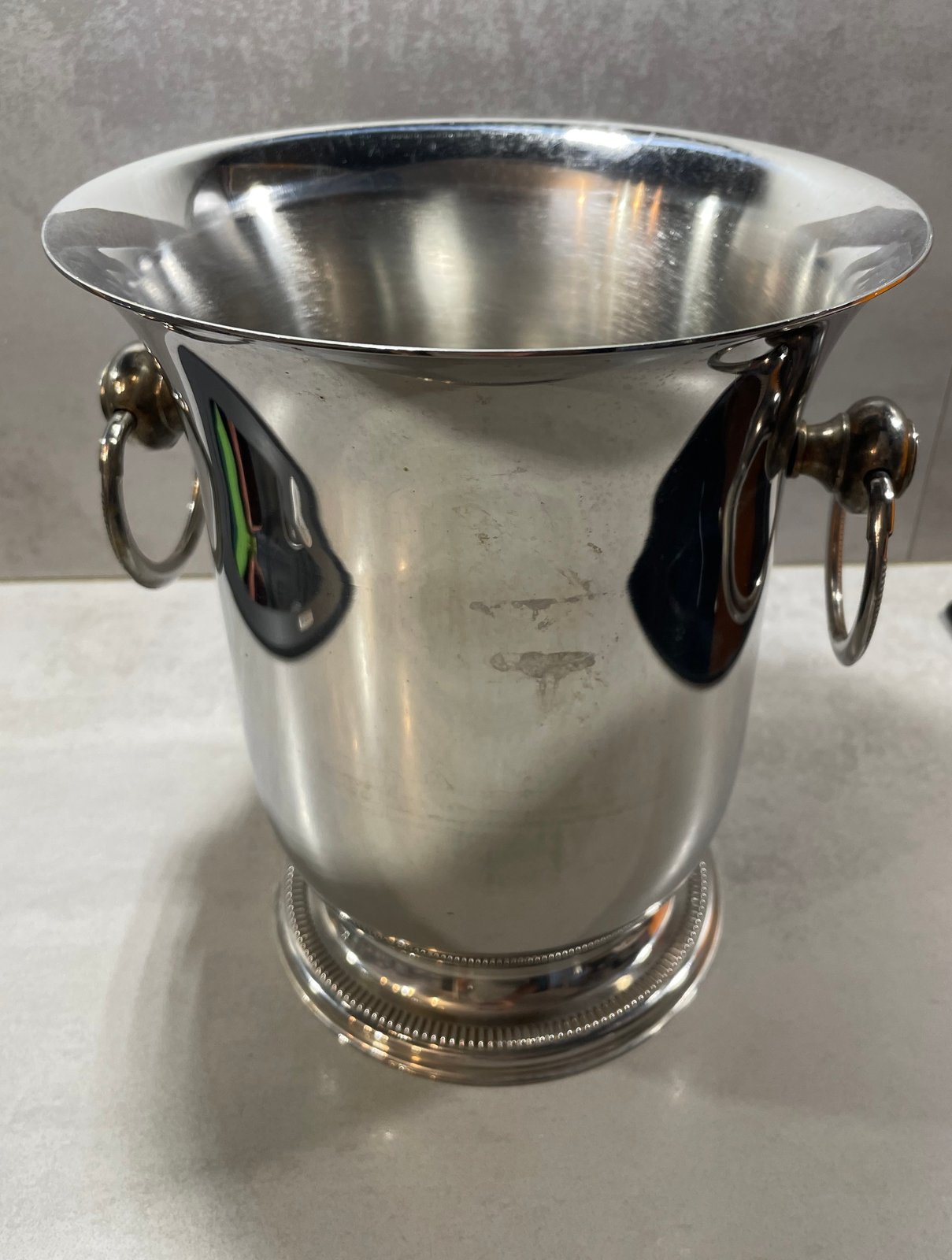
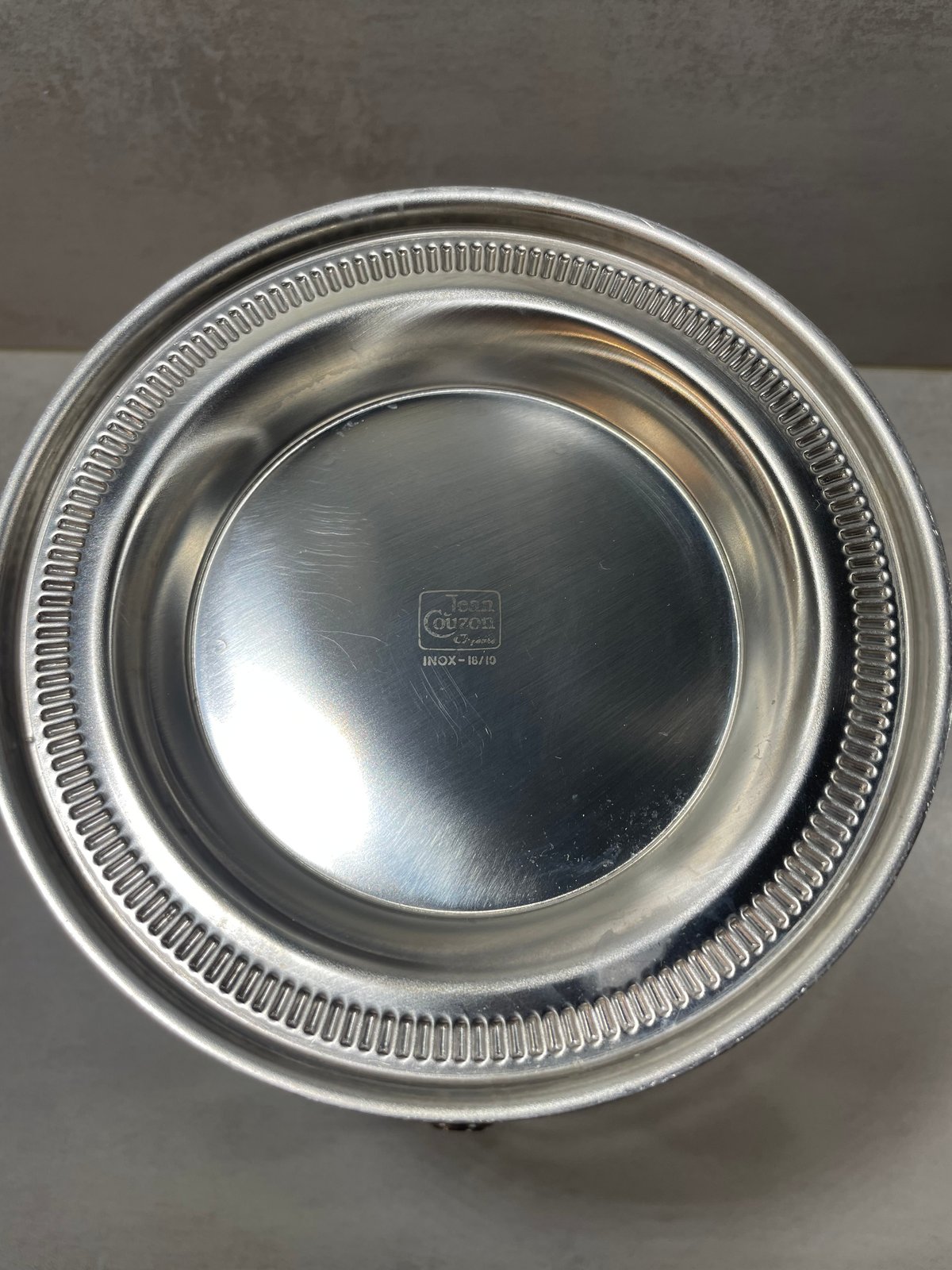
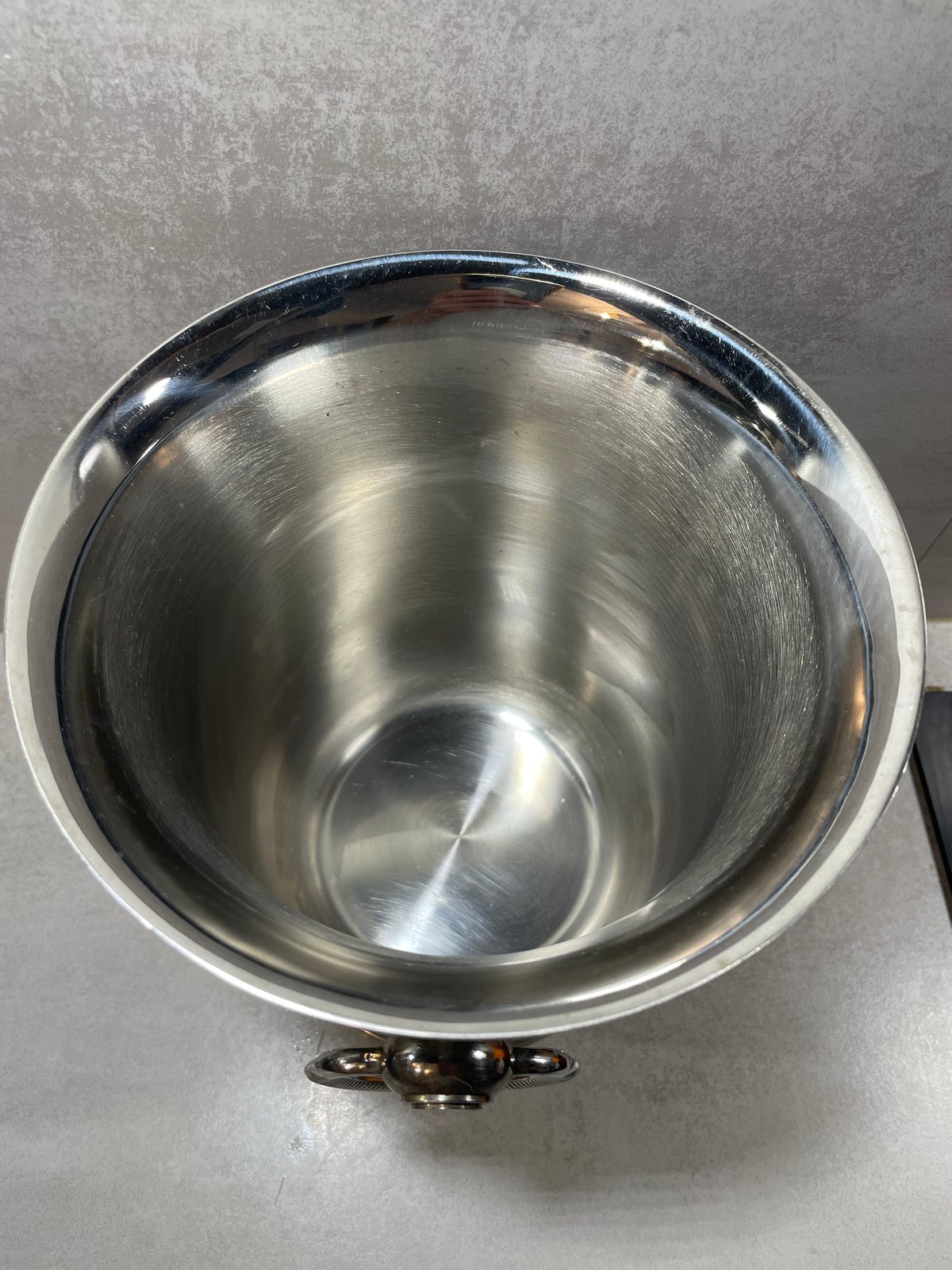
The Jean Couzon cooler in the collection is a documented example of this tradition. The underside is marked “Jean Couzon Orfèvre” and “INOX – 18/10”, indicating polished 18/10 stainless steel. Its flared upper rim, pedestal base with beaded and ribbed detailing, and two articulated ring handles reflect a considered French table-service design rather than a promotional object. We have not assigned it a specific model or an exact decade, as neither is documented.
Dating the Jean Couzon cooler
The underside of this cooler provides valuable identification evidence. It is clearly signed “Jean Couzon Orfèvre” and “INOX 18/10”, identifying both the French maker and the stainless-steel specification. Its polished stainless-steel construction, pedestal form and articulated decorative ring handles are consistent with Jean Couzon table and barware produced during the later 20th century. However, no period catalogue or manufacturer documentation identifying this exact model has yet been located. For this reason, Cook & Collect conservatively describes the piece as a late-20th-century French Jean Couzon champagne cooler, without assigning an unsupported model name or precise production year.
Collector’s note
A maker’s mark establishes authorship more securely than age. “Jean Couzon Orfèvre” identifies the maker, while “INOX 18/10” identifies the stainless-steel specification. Neither inscription alone provides a manufacturing date.
Materials and Construction
Material is one of the first things a collector reads. Vintage French champagne buckets appear in aluminium, stainless steel, acrylic and other synthetic materials, and — where historically appropriate — silver plate and other metals. Each behaves differently over time, which affects both appearance and how a piece should be assessed.
Aluminium, as in the Moët & Chandon example, is light and takes engraved or ribbed decoration well; it tends to show oxidation and use marks, particularly inside. Stainless steel, such as the 18/10 used by Jean Couzon, is more resistant and holds a polished surface, though it still carries light scratches from use. Acrylic and synthetic bodies, like the Veuve Clicquot bucket, allow strong colour and bold branding but are more prone to wear around rims and where metal handles meet the body.
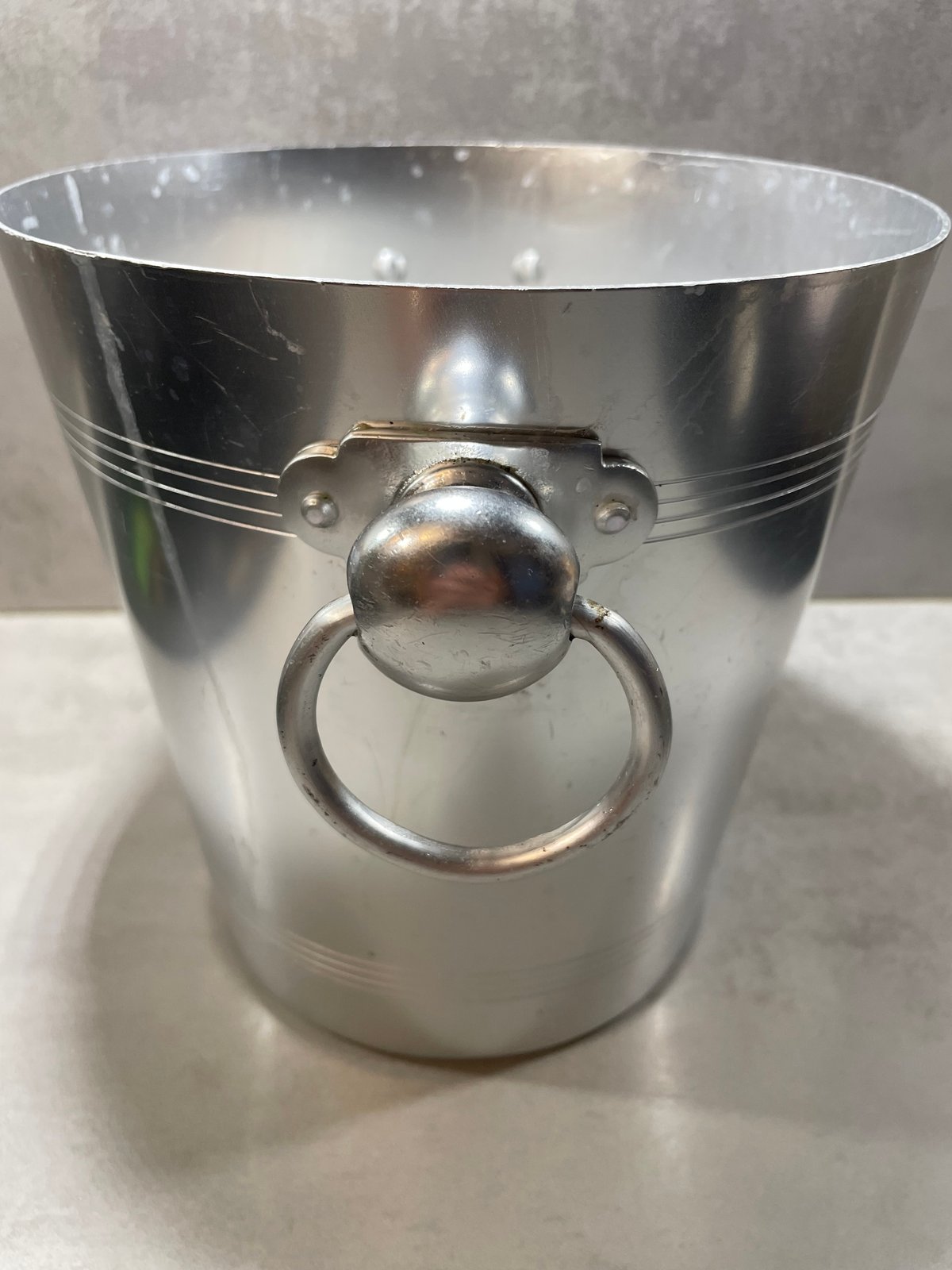
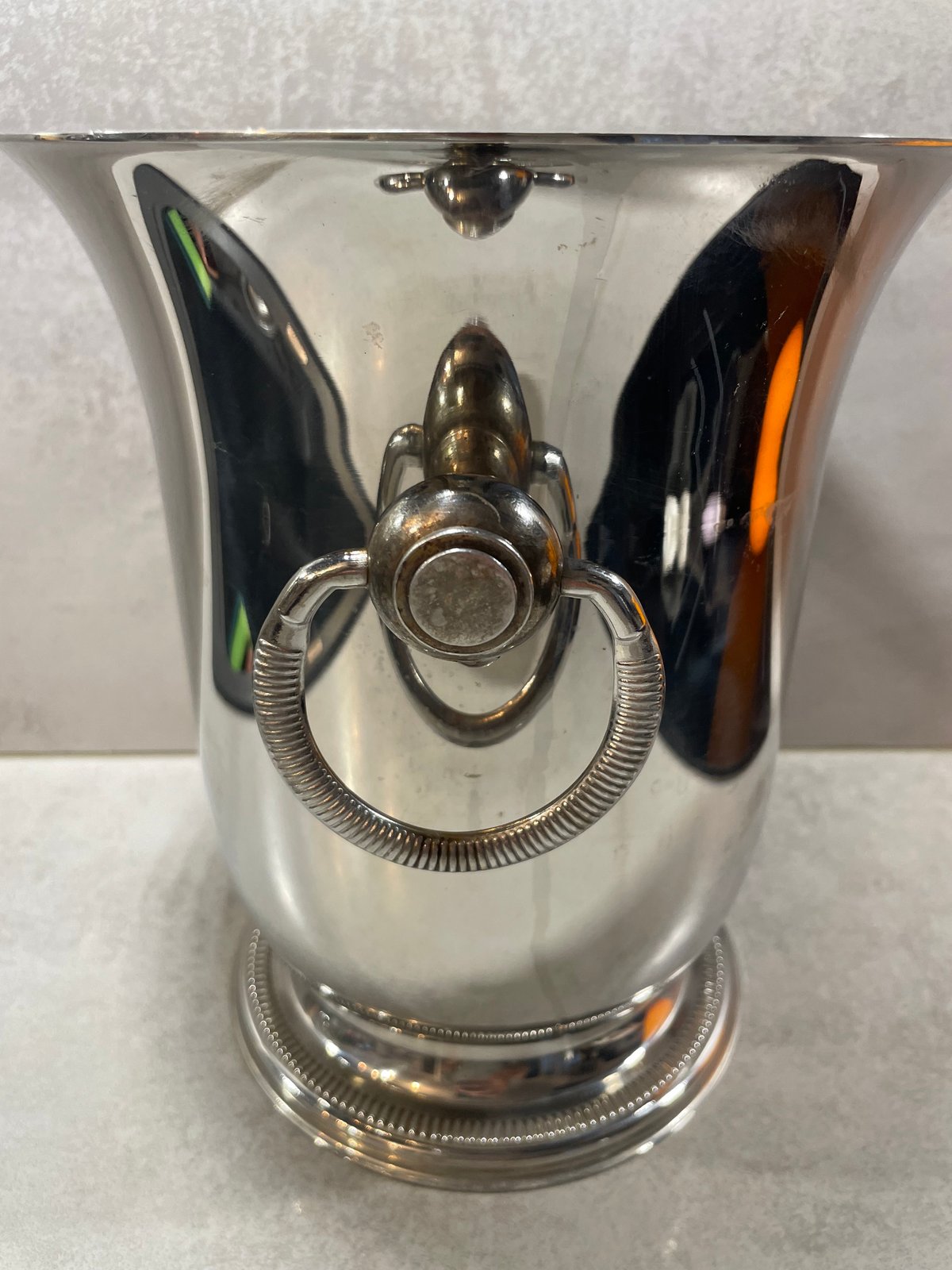
Construction details repay close looking: how handles are attached, whether a base is a separate pedestal or formed with the body, and how decorative elements such as ribbing or beading are executed. These details are often more informative than a single mark.
How to Identify a Vintage French Champagne Bucket
Identification is best approached as a combination of clues rather than a single answer. Useful evidence includes maker marks, house logos, typography, applied labels or plaques, handle construction, base construction, the material itself, manufacturing marks, and — where available — period catalogues and advertisements.
Two distinctions are worth stating plainly. First, a Champagne-house logo identifies the branded client or house; it does not by itself identify the manufacturer. Second, a “Made in France” mark confirms the country of origin but does not, on its own, name the maker. Treating these as separate pieces of information keeps an identification honest.
How Cook & Collect dates an object
A date attached to another surviving example is a starting point, not a conclusion. We compare maker’s marks, materials, construction, typography, house logos and documented examples, then look for period catalogues, advertisements and archival references whenever possible.
An important part of this process is separating the different kinds of evidence an object can provide. A Champagne-house logo may identify the client or Maison, a manufacturer’s stamp may identify the maker, and a country-of-origin mark may establish where an object was produced. None of these necessarily provides a manufacturing date on its own.
When the available evidence supports only a period rather than a precise year, we prefer the broader attribution. For collectors, understanding the limits of the available evidence is part of understanding the object.
Dating Vintage Champagne Buckets
A single clue rarely settles a date. Markings, construction methods, the evolution of a house logo, typography, materials and comparison with documented examples each contribute part of the picture, and a material or a logo can suggest only a broad period. Where the evidence is not conclusive, we prefer cautious wording — for example “20th century” or “mid-20th century” — or we note that dating is still being researched. For a marketplace listing this may seem overly careful; for a dealer building a considered collection, it is the point.
Condition, Patina and Restoration
These objects were used. Scratches, oxidation and general wear are to be expected on pieces that spent their working lives in restaurants, bars and homes, and such traces are part of an object’s history rather than simply flaws. The Moët & Chandon bucket, for instance, shows visible wear and interior oxidation consistent with genuine use, which we describe openly.
We would caution against aggressive polishing that removes original surface character or erases marks. Sympathetic cleaning is reasonable; stripping a piece back to an artificial shine is not, and it can destroy the very evidence a collector relies on.
Research & References
Our research combines the physical evidence found on each object with official Maison histories, manufacturer information, archival material, period documentation and comparative examples. Comparative objects can help establish recurring forms, dimensions and construction details, but they are not treated as proof of an exact production date.
- Veuve Clicquot
- Maison history and the legacy of Madame Clicquot Ponsardin, with the historic V.C.P. identity and anchor emblem:
- Moët & Chandon
- Maison history of the house founded in 1743:
- Jean Couzon
- For the Jean Couzon cooler, the primary evidence remains the physical “Jean Couzon Orfèvre / INOX 18/10” marking on the object itself. We have not located an institutional or archival source documenting this exact model, and we prefer to rely on the object’s own mark rather than attribute it on the basis of marketplace listings.
Collecting French Champagne Barware Today
French champagne buckets remain approachable to collect and easy to live with. They suit a considered interior, work as serving objects, and reward the collector who reads materials and marks carefully rather than trusting a name alone. As a category they sit naturally alongside French copperware and other objects of the table. For another perspective on French craftsmanship and identification, explore our collector’s guide to vintage French copper cookware.